

The Problem With "Belly Breathing"
Almost everyone knows that they should "breathe into your belly." Yoga teachers, meditation apps, gym trainers, and all handout providers instruct so. The advice is well-meant, but it's incomplete, and for many patients it reinforces the pattern that keeps their breathing shallow and restricted. So what is wrong here?
Breathing involves many muscles, and the major one is the diaphragm. Here is what a full diaphragmatic breath engages, and why the belly is only one part of it.
The diaphragm isn't a belly muscle
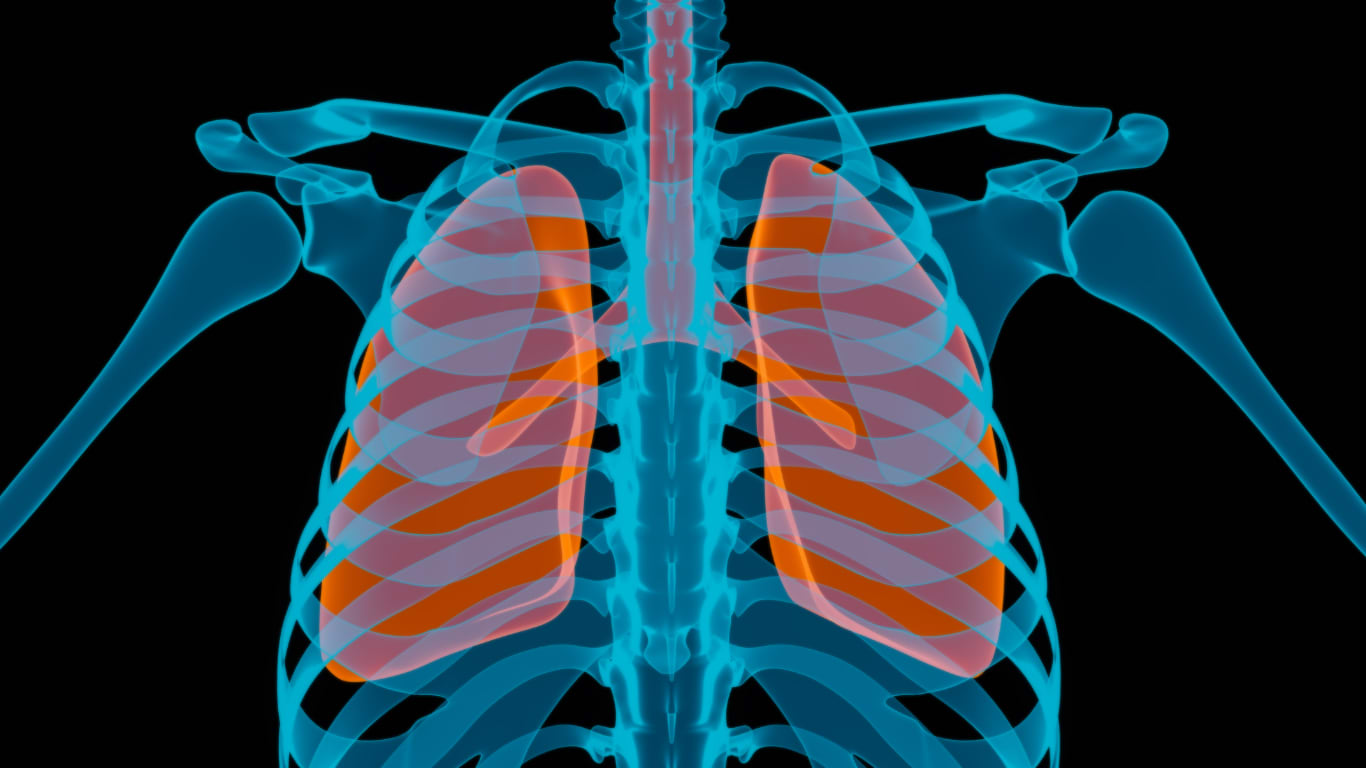
The diaphragm is a dome-shaped muscle at the base of the rib cage. It attaches to the sternum in front, the lower six ribs along the sides, and the lumbar spine in back. That makes it an umbrella fixed to a rim, anchored around the whole torso. It forms the roof of the abdomen.
When it contracts well, it flattens downward into the abdominal cavity and pulls the lower ribs outward and upward at the same time. This is the "bucket handle" motion, perhaps you’ve heard that expression. The external intercostal muscles between the ribs help by widening the rib cage at the front, sides, and back. A full breath is a 360-degree event. The belly expands, and so do the flanks, the back of the rib cage, and the whole perimeter of the lower ribs, in three dimensions.
Where belly-only breathing goes wrong
When instructions simply tell to "breathe into your belly," most people do exactly that. The abdominal wall pushes forward while the rib cage stays locked in place. The diaphragm is built for expansion all the way around, and intentional “belly breathing” gives it one direction.
We think that matters clinically, for three reasons.
The diaphragm never gets stretched sideways. The lateral fibers, the ones attached to the lower ribs on either side, only lengthen when the rib cage widens. If only the belly moves, those fibers stay short and understretched, breath after breath, year after year.
The ribs lose mobility. Ribs are joints, and they're meant to move with every breath, roughly 20,000 times a day. When rib motion is traded for belly motion, the rib joints can stiffen over time, and the intercostal muscles shorten and lose flexibility. Patients describe the result as a rigid, boxed-in rib cage, reduced lung capacity, upper back tension, or a tightness around the ribs they can't quite pin down. Rib joints and spaces between them contain many acupuncture points which become very sore when pressed on.
It reinforces a workaround. Many patients told to belly breathe are already leaning on the abdominal wall to compensate for a rib cage that isn't expanding, usually because of posture, old injuries, or chronic tension. More belly-only practice doesn't retrain the ribs. It rehearses the workaround.
What a full breath should feel like
To explore your breathing pattern and experience of full breathing, sit or lie comfortably and place your hands on the sides of your lower rib cage, fingers wrapping slightly toward your back (your own hands are the best gauge here). Inhale slowly through your nose and notice whether your hands are pushed outward and apart, or whether only your belly rises. On the exhale, the ribs should return inward and down, like a bellows closing.
If your hands barely move while your belly balloons out, your breathing is belly-dominant and the rib cage isn't participating.
A full breath expands the belly as the diaphragm descends, the flanks as the lower ribs flare sideways, and the back of the rib cage, which is often the most neglected direction. You may also feel a slight lift and widening at the front of the lower ribs.
Why it reaches beyond the chest
At our clinic, we treat breathing mechanics as a foundation of whole-body health. Restricted rib mobility can influence posture, core stability, vagal tone, and how efficiently the body recovers from stress. Restoring three-dimensional breathing is one of the simplest interventions we offer, and one of the most often overlooked.
So keep "breathe into your belly" as a starting point. Tonight, put your hands on your lower ribs and see what they do.

